

Football trials allow more and more players from around the world to travel to Spain with the dream of playing at the highest level. Spanish football is one of the most competitive and organised leagues on the planet, with clubs committed to young and international talent.
However, not all players manage to stay after completing football trials. Why do some foreigners attract attention and others do not? The answer lies in what Spanish clubs really value on and off the pitch. In this guide, we explain in detail what teams look for in a foreign player when conducting a football trial, how you can prepare yourself, and what aspects make the difference during a football trial or trial period in Spain.
Understanding the context of Spanish football
Before aspiring to play in Spain, it is essential to understand how clubs think and work. Spanish football is characterised by a technical, tactical and disciplined approach. Coaches value game intelligence more than physical strength or individual spectacle.
Spain has one of the most extensive professional and semi-professional football structures in the world:
LaLiga EA Sports (First Division)
LaLiga Hypermotion (Second Division)
Primera RFEF, Segunda RFEF and Tercera RFEF, where many international talents begin their journey.
Each category demands committed, trained and adaptable players who are willing to integrate into a professional environment.
Individual technique: precision and control over strength
The first thing Spanish coaches look for in a football trial is technique.
Spanish football is built on control, passing and quick decision-making. That’s why the players who stand out are those who can keep possession and play with judgement.
What clubs value in this regard:
Directional control with both feet.
Short, accurate passes, even under pressure.
Reading the game and ability to anticipate.
Constant mobility and support for teammates.
Clean execution of technical moves (dribbling, change of pace, feints).
A player who has mastered technique conveys confidence and adapts easily to the Spanish style, where possession and tactical intelligence are priorities.
Tactical understanding: knowing how to play for the team
The second key factor in determining whether a player is performing well in a football trial is tactical intelligence.
A player may have individual talent, but if they do not understand the collective game, they will struggle to fit into a Spanish system.
Coaches particularly value:
That the player maintains their position and understands the movements of the block.
That they know when to press, when to hold their position and when to break lines.
That they understand the phases of the game: start, transition and retreat.
That they know how to communicate with their teammates on the pitch, even if they do not speak the language.
In football trials organised by agencies such as New Football Era (NFE), coaches closely observe decision-making in real tactical situations. It is not enough to “do it well”: it must be done at the right time and with purpose.
Physical condition: endurance and steady pace
Although Spain is not an extremely physical league like others in Europe, the physical demands are high.
Training sessions are intense and matches are played at a fast pace for the entire 90 minutes.
What clubs evaluate in football trials:
Aerobic and anaerobic endurance.
Speed and change of pace.
Jumping power and body balance.
Recovery between efforts.
Scouts look for players who are able to maintain a high level of energy throughout the match, without letting their performance drop in the final minutes.
Mentality and professional character
One of the most decisive factors in a football trial, especially for a foreign player, is attitude and professional mentality.
Spanish clubs value humility, discipline and the ability to adapt culturally.
What coaches value most:
- Respect and punctuality.
- A positive attitude, even when mistakes are made.
- A willingness to learn and improve.
- The ability to adapt to life off the pitch.
- Commitment to the team and the club’s rules.
Many talented players miss out on opportunities because they fail to show maturity or professionalism.
On the other hand, those who integrate quickly and demonstrate responsibility tend to gain the trust of the coaching staff.
Communication and cultural integration
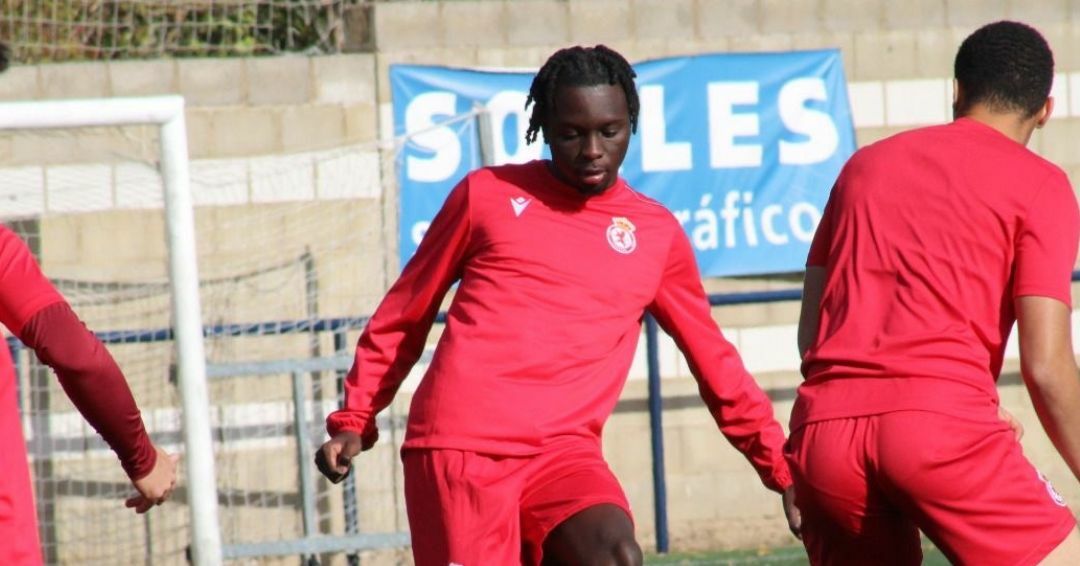
Spanish clubs appreciate foreign footballers who make an effort to integrate, as was the case with Cultural y Deportiva Leonesa and Jeremy Bisau during his trial period with Júpiter Leonés, the reserve team of the great Spanish second division club.
It is not just a matter of speaking the language, but also of understanding the cultural environment, customs and way of working.
How you can stand out:
Learn basic Spanish expressions related to football.
Show interest in the local culture.
Adapt to the club’s schedules and rules.
Respect the team’s style of play and philosophy.
Coaches highly value the ability to adapt quickly, especially in players who come from other continents.